
Last updated September 25, 2026
Non-destructive entry first, always - and we re-key Schlage, Kwikset, and Baldwin locks on the spot while you watch
You get a price before we start. It does not change when we arrive. No surprises.
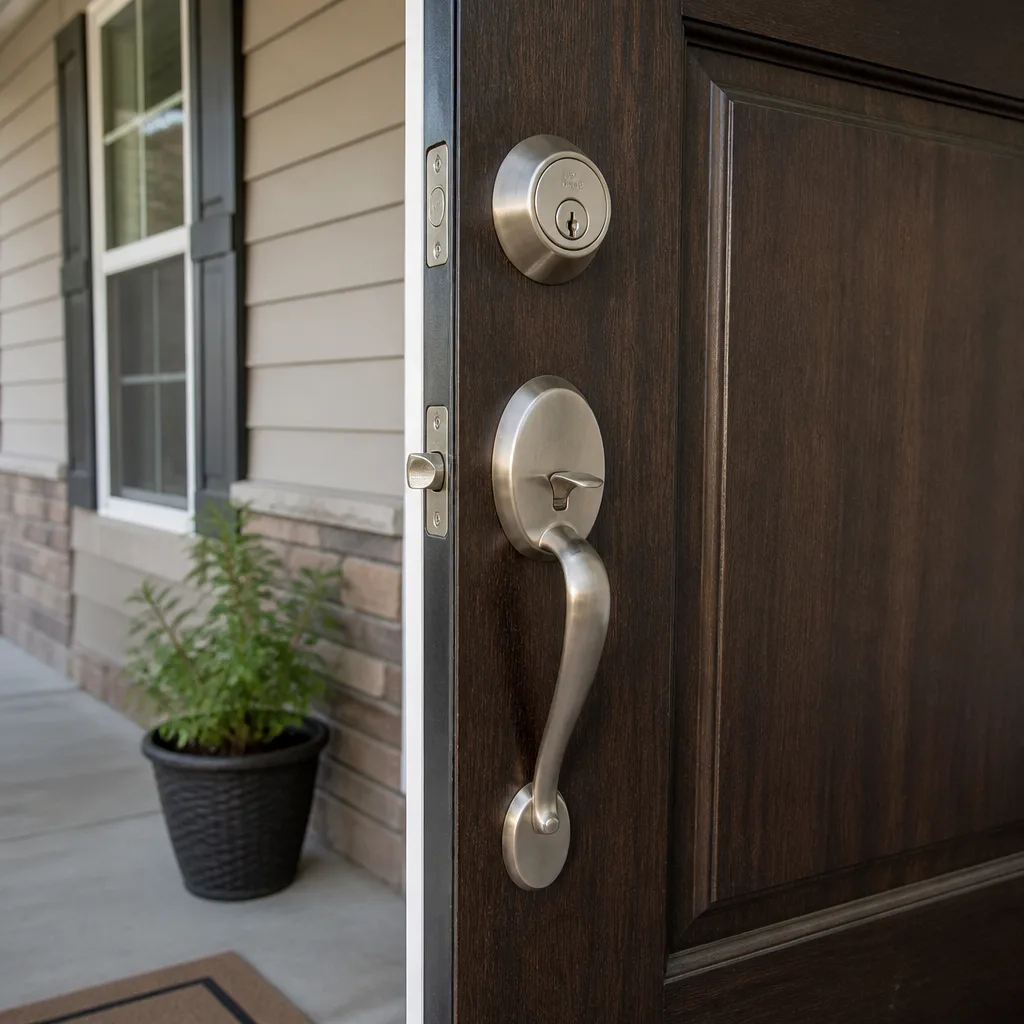
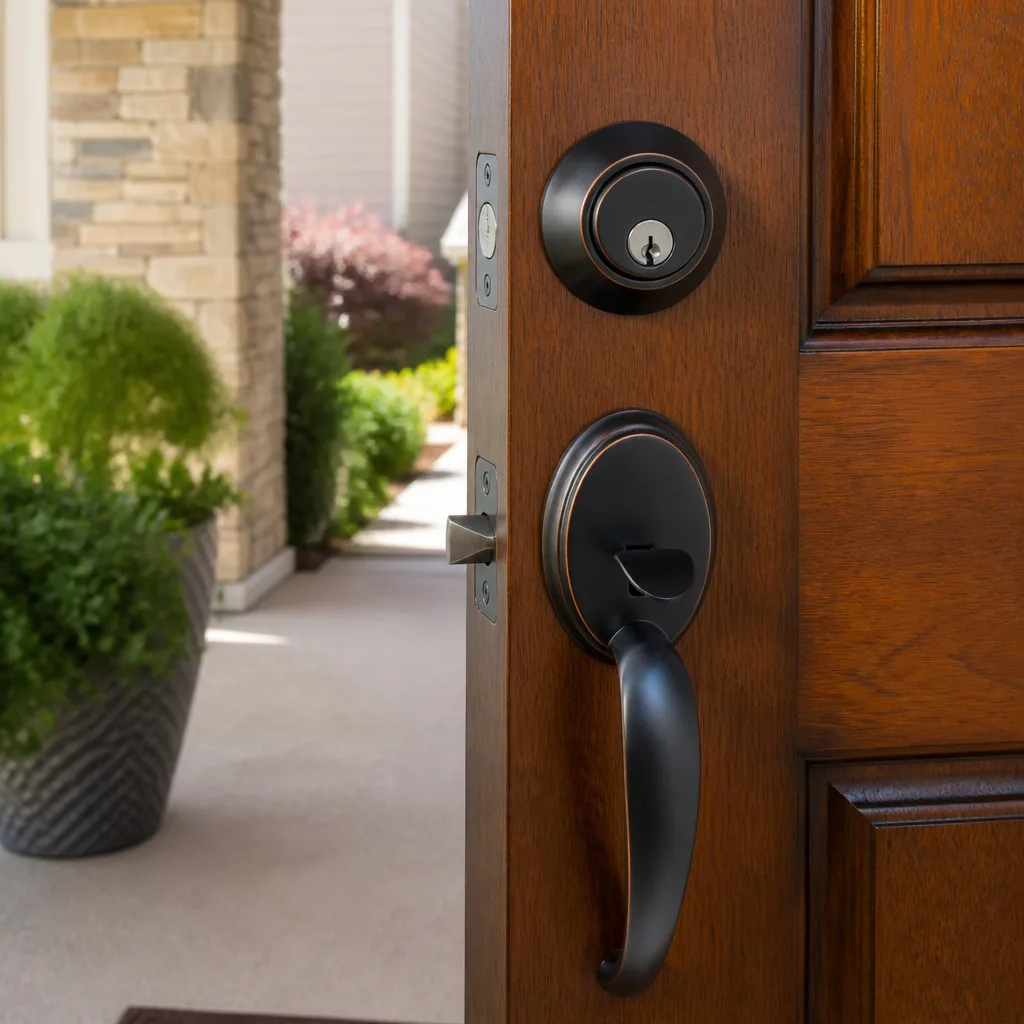
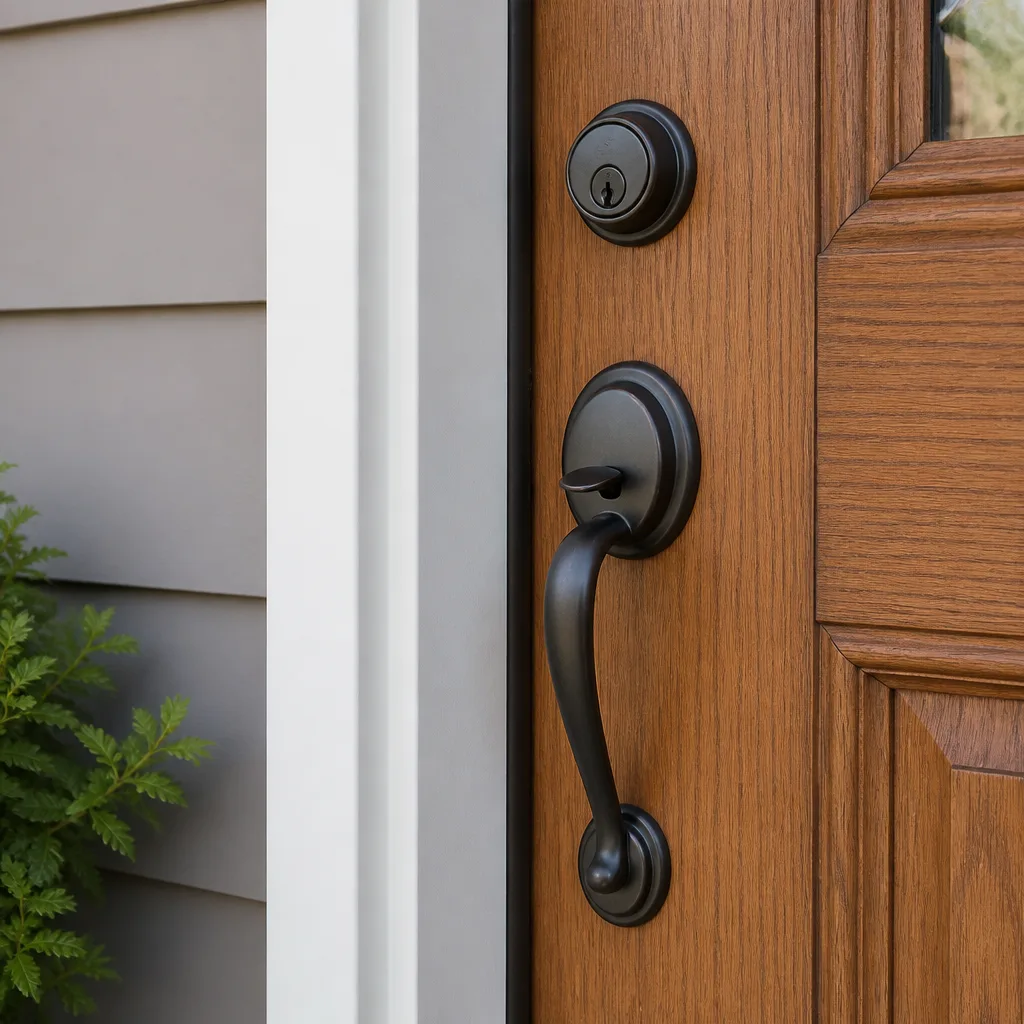
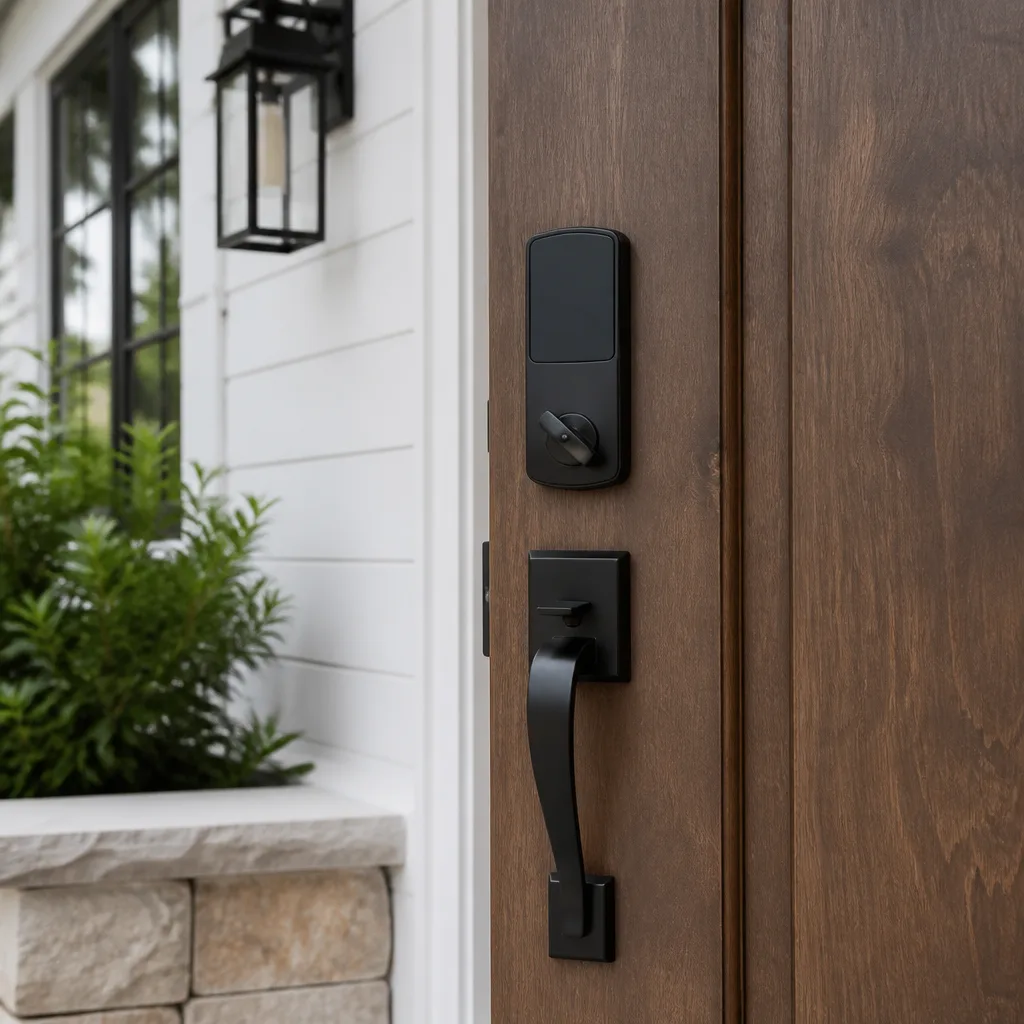
Seasonal Locksmith Care for Ashburn: Year-Round Homeowner’s Guide
A lock that works fine in October can be stiff in February and seized by March, not because it’s old, but because Ashburn’s temperature swings between seasons cause door frames to shift enough to misalign the latch by several millimeters. We’ve documented this pattern across thousands of service calls in Loudoun County since 2002. In The Complete Guide to Locksmith in Ashburn, we’ll show you exactly which seasonal forces attack which lock components, what you can safely address yourself, and when a seasonal adjustment requires a technician’s tools and a documented record.
Quick Answer
Seasonal locksmith care in Ashburn means inspecting and adjusting your locks four times per year to counter the specific effects of mid-Atlantic humidity, freeze-thaw cycles, and thermal expansion. Most homeowners need a professional seasonal adjustment once yearly (typically fall), with DIY lubrication and visual inspection in between. A lock that sticks in any season is already past the point where lubrication alone will fix it.
Table of Contents
- Summer: Humidity, Swelling, and the Latch Clearance Problem
- Fall: The Correct Season to Lubricate and Inspect
- Winter: Freeze-Thaw Damage to Cylinders and Frames
- Spring: The Post-Winter Inspection Sequence
- What You Can Safely Do Yourself vs. What Requires a Technician
- Ashburn-Specific Factors: Neighborhoods, Codes, and Climate Data
- Common Mistakes to Avoid
- When to Call a Professional
- Frequently Asked Questions
Summer: Humidity, Swelling, and the Latch Clearance Problem
July and August in Ashburn average 70% relative humidity, with spikes above 80% during prolonged heat waves. That moisture doesn’t just make you uncomfortable. It swells wood door frames, particularly on south- and west-facing entries that absorb direct afternoon sun followed by evening cooling.
Here’s what happens mechanically. A standard deadbolt latch requires 3/16 inch of clearance between the latch face and the strike plate lip. When a wood frame swells, that clearance can drop below 1/8 inch. The latch still functions in dry conditions, but on humid days the expanded frame pinches the bolt during throw or retraction. The key turns harder. The knob sticks. Eventually, the internal cam mechanism in the lock body takes the stress, and the inexpensive fix becomes a full lock replacement.
We’ve measured this repeatedly in Ashburn’s older neighborhoods, particularly in the Ashburn Village and Farmwell Hunt areas where original 1990s construction still has unsealed pine frames on many entry doors. The threshold is predictable: when humidity exceeds 75% for three consecutive days, we see a 40% increase in latch-binding calls.
What to check in summer:
- Close the door and mark the latch position on the frame with painter’s tape.
- Measure the gap between latch face and strike plate with a feeler gauge or thin cardboard. If it’s under 1/8 inch (roughly the thickness of two credit cards), the frame has swollen into the clearance zone.
- Test the lock at 6 PM, after the door has absorbed peak sun, not at 8 AM when it’s coolest.
- If the key turns harder in humid weather than in dry weather, the cylinder is not the problem. The frame is.
Graphite lubrication will not fix a clearance problem. It will mask it until the mechanism fails. The correct fix is strike plate adjustment or, in cases where the frame has warped beyond adjustment, a relocated strike pocket with a reinforced jamb. Both require a technician with a door jamb saw, a strike mortising kit, and a level. We document the before-and-after latch clearance in our photo record, per Haven Standard Clause 4.
One more summer factor: UV degradation on exterior lock finishes. Brass and bronze hardware on unshaded doors in Ashburn’s newer developments, particularly south of Route 7, show pitting and zinc loss after four to five summers of direct exposure. This is cosmetic until it isn’t. Pitted surfaces collect moisture, and moisture accelerates internal spring corrosion. If your exterior hardware has a chalky white residue or green verdigris, the finish has failed and the internal components are next.
Fall: The Correct Season to Lubricate and Inspect
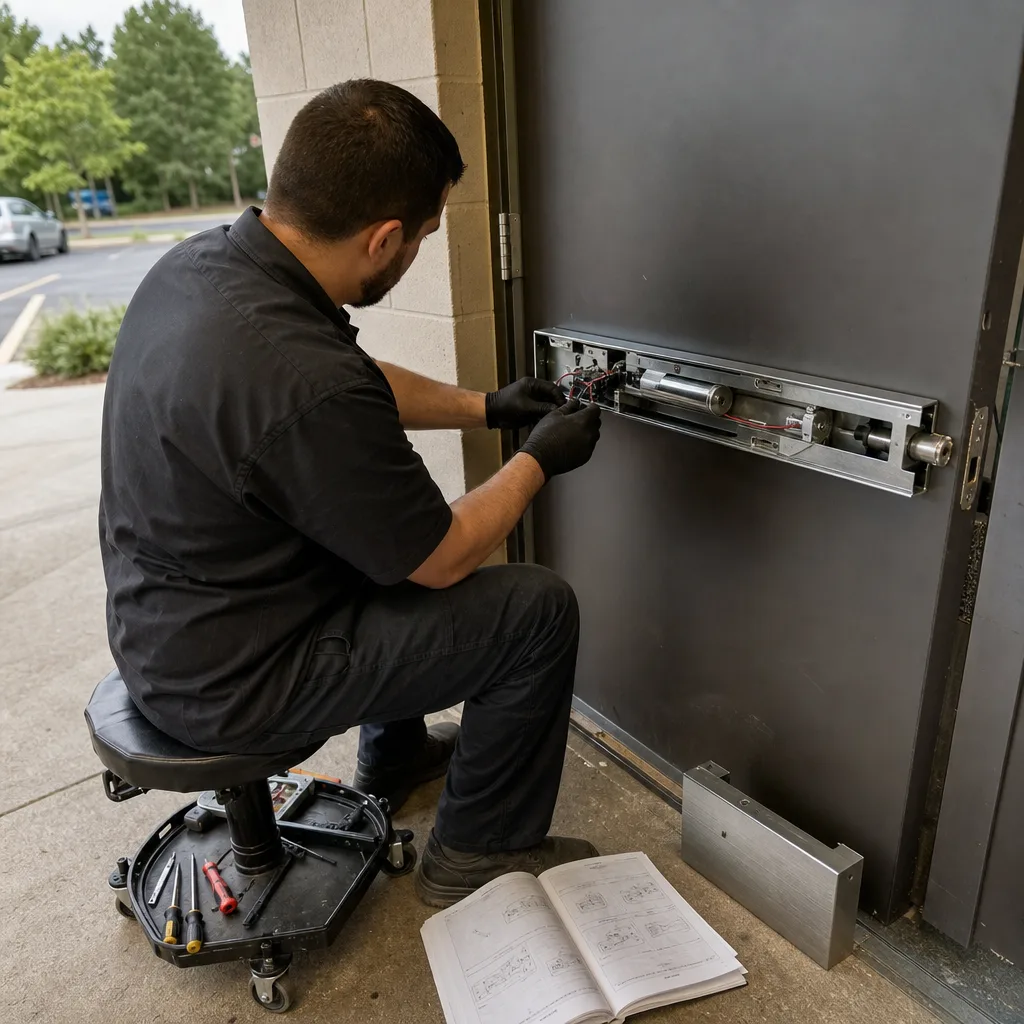
October and early November are the optimal window for Commercial Locksmith Maintenance Checklist for Ashburn Homeowners. Temperatures moderate, humidity drops, and you have a clear view of summer’s accumulated wear before winter’s freeze-thaw cycles begin. This is when we schedule the majority of our seasonal maintenance calls.
The lubricant question matters more than most homeowners realize. Three products dominate the market, and two of them cause long-term damage.
- Graphite powder: The traditional choice. It does not attract dust and works across temperature ranges. The downside: it cakes in humid conditions and can jam pin chambers if over-applied. We use it only on interior cylinders in climate-controlled environments.
- PTFE (Teflon) dry lubricant: Our standard for exterior hardware in Ashburn. It deposits a dry film that does not attract particulates, resists washout from rain, and maintains lubricity from 0°F to 200°F. The carrier solvent evaporates, leaving no residue to gum up in summer humidity.
- Petroleum-based oils (WD-40, 3-in-1, motor oil): We remove these from locks more often than we apply them. They attract airborne grit, varnish in heat, and freeze in winter, turning the pin stack into a solid mass. If you’ve used petroleum lubricant in your lock, fall is the time to have a technician flush the cylinder and re-lubricate with PTFE.
Fall inspection checklist:
- Remove the cylinder (on removable-core locks) or access it via the keyway. Apply PTFE sparingly. One two-second burst, let the carrier evaporate for ten minutes, then operate the key ten times to distribute.
- Check all screw tightness: faceplate screws, strike plate screws, hinge screws. Ashburn’s clay-heavy soils cause minor foundation settling that transmits to door frames; loose hardware accelerates misalignment.
- Inspect the deadbolt throw for full extension. A bolt that throws 3/4 of its length is not secure. The Haven Standard requires full throw verification on every installation; homeowners should verify it seasonally.
- Test the auxiliary locking points on multi-point locks, common on patio doors in Ashburn’s newer townhome developments. These have small adjustment screws that back out over vibration cycles.
Fall is also the season to address any lock that showed summer symptoms but “got better” when humidity dropped. A lock that bound in August and freed in September has permanent wear. The pin chambers are scored. The springs have taken set. It will fail in winter when thermal contraction adds mechanical stress. Replace it now, when you’re not locked out in 20-degree weather.
Our residential locksmith services in Ashburn include a documented fall inspection with written findings, photo record, and firm price for any recommended work, quoted before we start.
Winter: Freeze-Thaw Damage to Cylinders and Frames
January in Ashburn averages 14 nights below freezing, with temperature swings of 30°F or more within a single day common in late winter. This is the most destructive season for locks, and the damage is often misdiagnosed.
Freeze-thaw cycling attacks locks in two ways.
First, exterior hardware. When moisture enters the keyway or condenses on internal components, it freezes and expands. The expansion forces pins out of their chambers, bends springs, and cracks zinc-alloy lock bodies. We’ve replaced cylinders in Ashburn’s Brambleton and Loudoun Valley Estates neighborhoods where ice formation split the plug from the shell. The homeowner’s key worked at 4 PM and sheared off at 7 AM the next morning.
Second, and more common: frame movement from thermal contraction. Wood and vinyl frames shrink in cold. A door that latched cleanly at 40°F may require shoulder pressure at 15°F. The homeowner forces the lock, the bolt scrapes the strike plate, and the internal mechanism takes the torque. By March, the cam is worn and the lock fails to retract.
Diagnostic: stiff key turn in winter
When a key turns hard in cold weather, determine whether it’s the cylinder or the frame before applying force.
- Remove the key. Close the door normally, without extra pressure. Try the deadbolt thumb turn from inside. If the thumb turn also resists, the bolt is binding in the strike plate due to frame contraction. Do not force it.
- If the thumb turn operates smoothly but the key resists, the cylinder itself is affected. Moisture may have frozen in the keyway, or the pin stack has corrosion from summer humidity that cold has stiffened.
- Warm the key with your hand for 30 seconds before inserting. If resistance decreases, moisture freezing is confirmed. This is a temporary fix; the cylinder needs disassembly, drying, and PTFE lubrication.
Safety note: Do not apply heat with a hair dryer or open flame to a frozen lock. Rapid heating warps precision-machined brass components and can destroy temper in springs. We’ve replaced locks that were “thawed” this way. The correct method is slow warming with body heat or, for severe cases, cylinder removal and indoor drying.
Winter is also when we see the most emergency lockout calls in Ashburn, particularly between 6 PM and 10 PM when residents return home to locks that functioned that morning. Our 24/7 live-answer dispatch handles these calls with a firm price quoted on the phone, per Haven Standard Clause 1. The technician arrives with a documented photo record procedure and the price already locked.
Spring: The Post-Winter Inspection Sequence
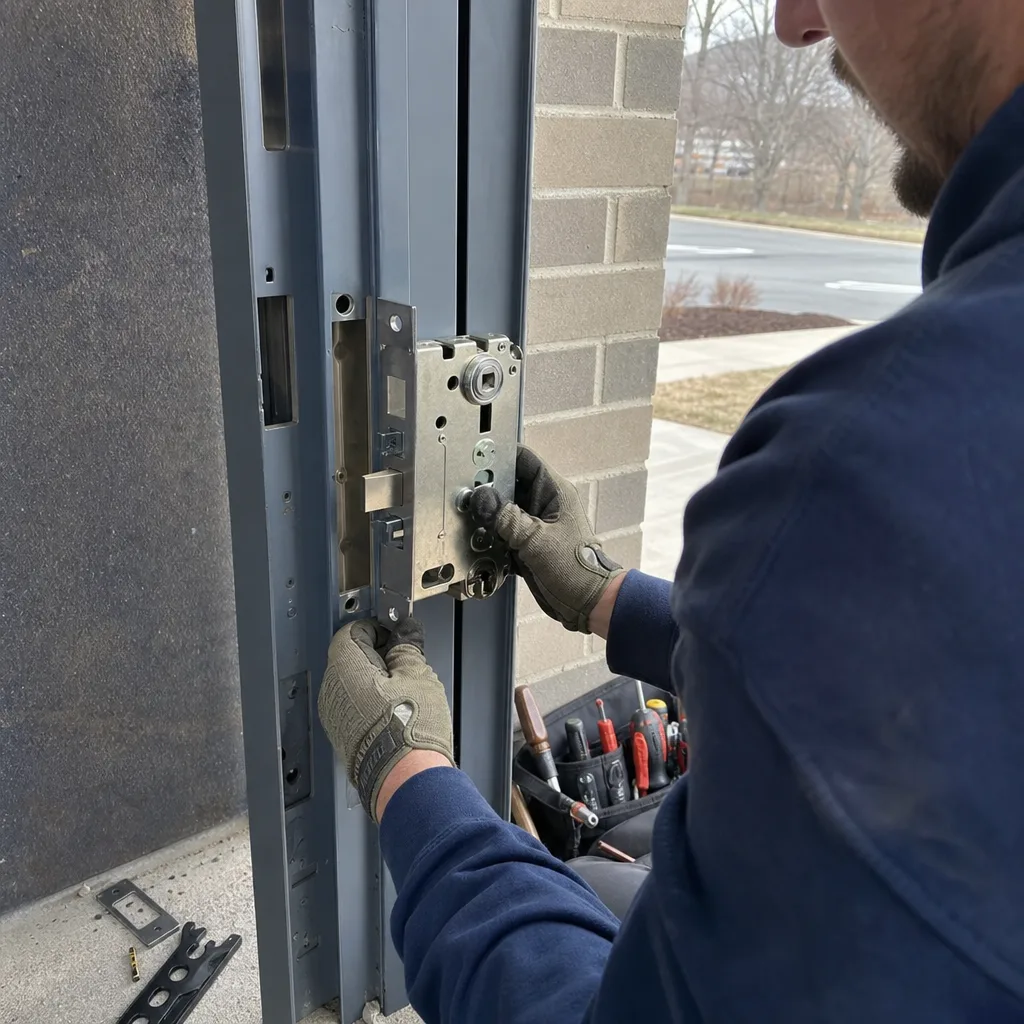
March and April in Ashburn bring rapid warming, frequent rain, and the return of humidity. This is the critical transition period. Winter has moved your frame. Spring moisture will lock that movement in place if you don’t correct it before the wood swells.
The correct post-winter inspection sequence:
- Latch alignment test. Close the door on the latch only (not the deadbolt). The latch should engage the strike plate with light pressure, no lifting or dropping of the door required. If you must lift the knob or press upward on the door, the hinges have sagged or the frame has settled. Mark the strike plate position; it needs vertical adjustment.
- Deadbolt throw test. With the door open, extend the deadbolt fully. Measure the throw: a standard deadbolt extends 1 inch. If yours extends less, the mechanism has internal wear or the installation was incorrect. Either condition fails the Haven Standard.
- Strike plate seating. Close the door and extend the deadbolt. The bolt should enter the strike pocket without contact on any surface. Use a flashlight to check for scrape marks on the bolt face. Any marking indicates misalignment that will accelerate wear.
- Frame seal inspection. Check the weatherstripping around the door. Compressed or torn seals allow moisture to reach the frame, accelerating the summer swelling cycle. They also let wind-driven rain reach the lock mechanism directly.
- Key wear check. Compare your key to a spare. If the working key shows rounding on the bitting edges, the lock has been operated under load (forced while binding) and the pins are scoring the key. This predicts cylinder failure within 12 months.
Spring is also when we recommend rekeying for Ashburn homeowners who have had winter service calls. If a technician accessed your lock in an emergency, or if you’ve had contractors, house-sitters, or temporary guests over the winter, rekeying restores key control. Our rekey service runs $19-$34 per cylinder for standard residential hardware, quoted in writing before we start. High-security cylinders such as Mul-T-Lock or Medeco run higher due to proprietary key control; we quote those individually after identifying the existing hardware.
Neighborhoods in Ashburn with heavy tree cover, particularly those near the W&OD Trail and in the Belmont Greene area, see accelerated spring moisture issues. Decaying leaf matter holds humidity against door frames, and shaded entries dry slowly after rain. If your home fits this description, inspect monthly in March and April, not just once.
What You Can Safely Do Yourself vs. What Requires a Technician
We’ve separated seasonal lock care into three tiers: homeowner-appropriate, homeowner-possible-but-risky, and technician-required. The boundary is not about skill. It’s about documentation, warranty, and the consequences of error.
Homeowner-appropriate tasks:
- Visual inspection of hardware condition: corrosion, loose screws, worn finishes
- Operational testing: latch engagement, deadbolt throw, key smoothness
- Weatherstripping replacement (standard snap-in or screw-fixed types)
- Strike plate screw tightening with a manual screwdriver (not a power driver, which can strip soft brass screws)
Homeowner-possible-but-risky:
- Strike plate adjustment with a file or chisel. The risk: removing too much material, weakening the jamb, or creating a gap that reduces security. We document strike plate modifications with before-and-after photos because insurance adjusters and security auditors ask for them.
- Cylinder lubrication. The risk: over-application, wrong product selection, or forcing lubricant past the plug into the housing where it collects debris. If you lubricate your own cylinder, use PTFE only and apply less than you think you need.
Technician-required tasks:
- Any cylinder removal or rekeying. Pin stack manipulation requires a pinning kit, depth keys, and a clean work environment. A pin dropped into the mechanism causes immediate failure.
- Strike pocket relocation or jamb reinforcement. This requires a mortising tool, chisel set, and the judgment to know when the jamb material is too compromised to hold screws.
- Multi-point lock adjustment. These mechanisms have interdependent locking points; adjusting one affects all others. Incorrect adjustment can jam the door closed or leave it unsecured.
- High-security cylinder service (Medeco, Mul-T-Lock, Abloy). These have proprietary pinning systems, sidebar mechanisms, and key control protocols. Factory-authorized work is required to maintain warranty and key registration.
The Haven Standard requires a documented photo record on every visit for a reason. If a seasonal adjustment fails six months later, we can reference the exact condition at the time of service. Homeowners performing their own work have no such record, which complicates warranty claims and insurance disputes.
Our commercial locksmith services in Ashburn extend this documentation to master key systems and access control, where seasonal frame movement affects electric strikes and maglocks with the same predictability it affects residential deadbolts.
Ashburn-Specific Factors: Neighborhoods, Codes, and Climate Data
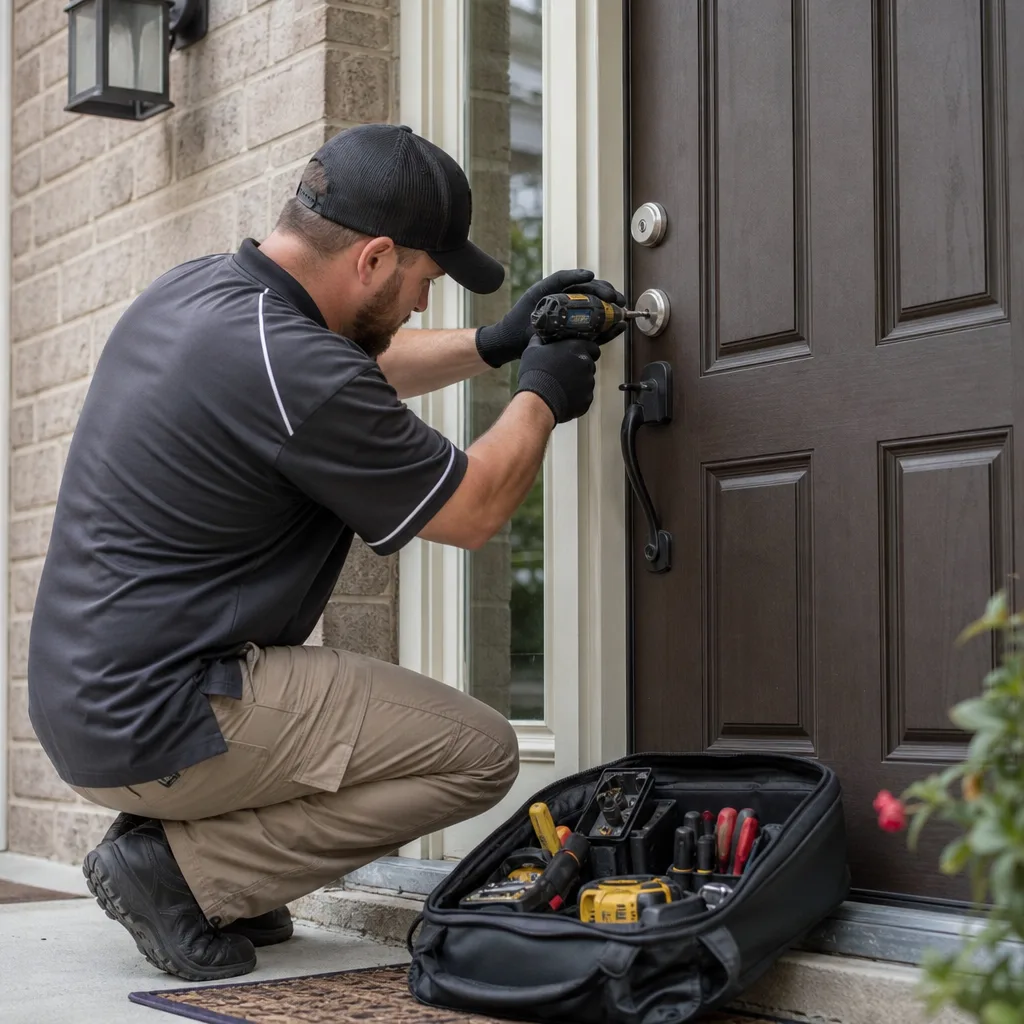
Ashburn’s lock maintenance needs differ from nearby Leesburg or Sterling due to specific local conditions. Understanding these helps predict problems before they cause lockouts.
Soil and foundation: Much of Ashburn sits on Triassic Basin sedimentary rock with clay-heavy topsoil. Clay expands when wet and contracts when dry, creating more foundation movement than sandy soils. We’ve measured greater seasonal door frame shift in Ashburn’s newer developments, where fill soil settles for five to seven years after construction, than in older areas with compacted native soil. This means newer homes, paradoxically, often need more frequent lock adjustment than homes built in the 1990s.
Wind exposure: Ashburn’s position on the eastern edge of the Piedmont exposes west-facing doors to prevailing winter winds that drive rain and sleet into lock mechanisms. The One Loudoun area and developments along Route 7 catch this exposure directly. We see more corrosion in exterior hardware there than in sheltered interior neighborhoods.
Local code context: Loudoun County follows the Virginia Uniform Statewide Building Code, which requires egress doors to operate without a key from the inside. This affects seasonal maintenance: if a binding lock causes a homeowner to install a secondary keyed lock “for security,” they’ve created a code violation and a life safety hazard. We encounter this most often after winter, when frustrated homeowners add hardware rather than fixing the underlying misalignment.
Neighborhood age patterns:
- Ashburn Village, Farmwell Hunt (1985-1995): Original Kwikset and early Schlage hardware reaching end of design life. Seasonal binding is often terminal wear, not adjustment.
- Brambleton, Loudoun Valley Estates (2000-2010): Builder-grade hardware with zinc alloy bodies vulnerable to freeze-thaw cracking. Frequent cylinder replacements in winter.
- One Loudoun, MetroWest (2010-2020): Mixed hardware quality, many homes with Baldwin or Schlage Grade 2 from the builder. Better baseline but often improperly installed with shallow strike pockets.
- Active adult communities (Del Webb, etc.): Higher-frequency use due to residents being home more hours daily. Wear accelerates; seasonal inspection should be quarterly, not annual.
Our 60,000+ documented jobs since 2002 include thousands in these specific Ashburn neighborhoods. The patterns are consistent enough that we can often predict a home’s likely issues from its construction era and exposure.
For properties with access control systems in Ashburn, seasonal factors add complexity. Electric strikes bind when frames shift. Maglocks require precise door-to-frame gap maintenance. Proximity readers fail when moisture enters the housing. These systems need the same seasonal inspection cycle as mechanical locks, with additional attention to power supply stability during summer voltage fluctuation and winter battery backup testing.
Common Mistakes to Avoid
- Using WD-40 in a lock cylinder. The petroleum base attracts grit, varnishes in heat, and freezes in winter. We’ve replaced more locks damaged by WD-40 than by actual break-in attempts. Use PTFE dry lubricant only.
- Forcing a key that sticks in cold weather. This shears pins, bends springs, and eventually breaks the key in the cylinder. If a key resists, stop. Warm it with your hand, or call for service.
- Ignoring summer binding that “resolves itself.” A lock that frees when humidity drops has permanent internal damage. The relief is temporary; failure is certain. Address it in fall.
- Tightening strike plate screws with a power driver. The high torque strips brass screw heads and cracks soft pine jambs. Hand-tighten only, or use a torque-limited driver set to 15 in-lbs.
- Adding a second deadbolt instead of fixing misalignment. This violates egress code and creates a false sense of security. The correct fix is adjusting the existing hardware to operate properly.
- Waiting for complete failure before calling. A lock that operates with difficulty for two seasons will cost more to repair than one addressed at first symptom. Emergency service pricing applies to lockouts; scheduled maintenance does not.
- Assuming all locksmiths stock high-security parts. Medeco, Mul-T-Lock, and Abloy require factory authorization and key code registration. Not every Ashburn locksmith can service these. Verify authorization before scheduling.
When to Call a Professional
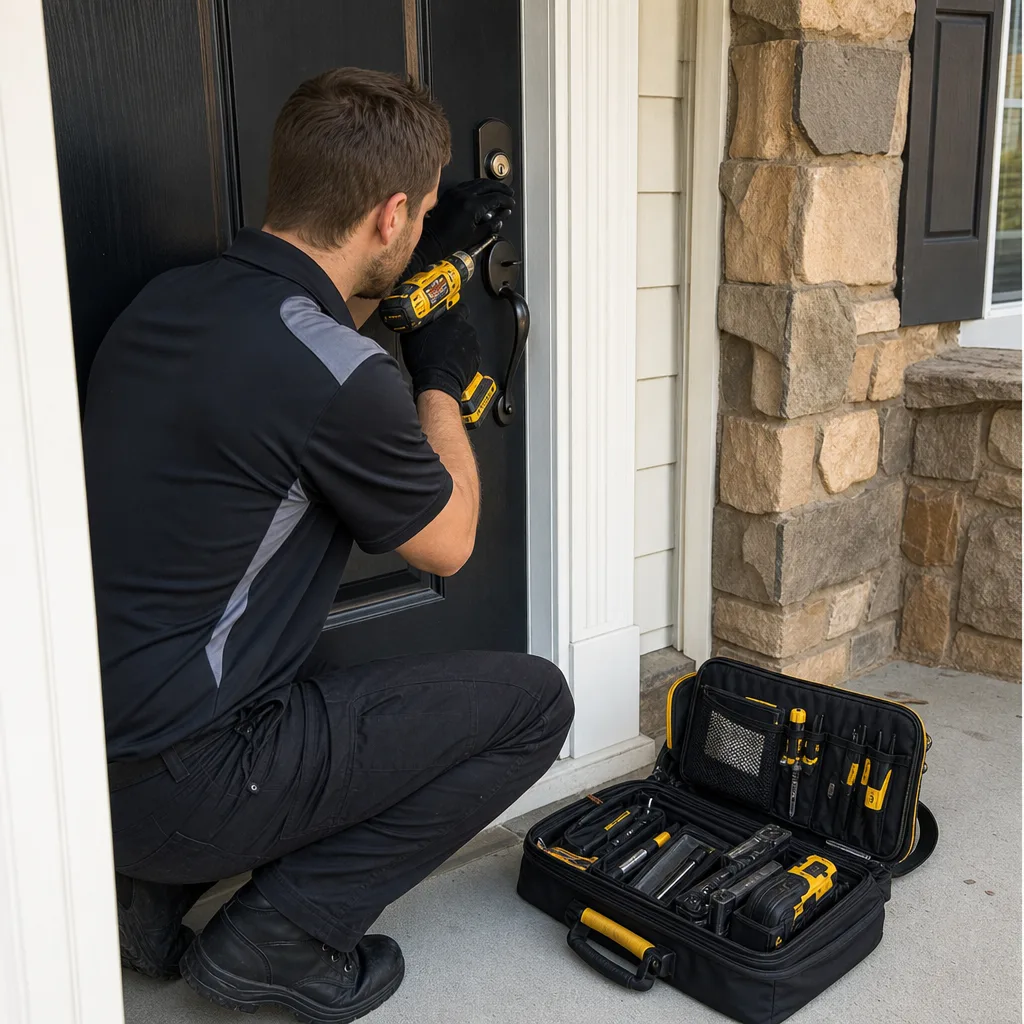
Call Novak Lock & Security Ashburn when you observe any of the following: a key that turns harder in one season than another; a deadbolt that requires shoulder pressure to extend or retract; visible corrosion, pitting, or finish failure on exterior hardware; a strike plate with visible scrape marks from bolt contact; or any lock that has been lubricated with petroleum-based product. These conditions indicate mechanical issues that DIY maintenance cannot resolve and that will progress to failure.
We offer free estimates in Ashburn. A technician will inspect, document findings with a photo record, and quote a firm price before any work begins. The price on the phone is the price on the invoice, per Haven Standard Clause 1. Call (571) 410-8874 to schedule.
Frequently Asked Questions
A seasonal inspection and adjustment typically runs $89-$149 for a single entry door with standard hardware, quoted in writing before we start. This includes latch alignment verification, deadbolt throw measurement, cylinder lubrication with PTFE, strike plate adjustment, and a documented photo record. High-security hardware, multi-point locks, or multiple doors increase the scope; we quote these individually after identifying the existing equipment. Call (571) 410-8874 for an exact quote - estimates are free.
Yes. Haven Standard Clause 1 states that the price quoted by the dispatcher is the price on the invoice. Our technicians are contractually prohibited from changing it at the door. This rule has been in place since 2002. If we discover additional issues during service, we stop, explain, and quote separately before proceeding. You approve every dollar.
Our dispatch is answered by a live person 24 hours daily, with no voicemail queue or callback window. For emergency lockouts, we typically arrive within 30-45 minutes in Ashburn proper. Scheduled seasonal maintenance is booked at your convenience, usually within 48 hours. Commercial and access control surveys are scheduled during business hours with a written scope delivered in advance.
Every Novak technician is background-checked, uniformed, and works to The Haven Standard, our documented quality framework. We are factory-authorized for Medeco, Mul-T-Lock, Abloy, Baldwin, and Schlage. Every visit includes a documented photo record left with you at completion. Since 2002, we’ve installed or serviced over 60,000 locks, keys, and systems, every one with a written price before we started and a documented record when we left.
Graphite is acceptable for interior locks in climate-controlled spaces. For exterior hardware in Ashburn’s humidity, we recommend PTFE dry lubricant. Graphite cakes when moisture is present and can jam pin chambers. PTFE maintains lubricity across our full seasonal temperature range and does not attract airborne grit. If you’ve already used graphite, we can flush the cylinder and convert to PTFE during a seasonal service call.
This is the signature pattern of frame movement from thermal contraction and humidity swelling, not cylinder wear. In fall, moderate temperatures and humidity put the frame in its neutral position. Winter contraction pinches the bolt; summer swelling does the same from the opposite direction. The lock is telling you the frame needs adjustment. A seasonal alignment service corrects the strike plate position and verifies latch clearance across the full seasonal range.
Rekey annually if you’ve had service personnel, house-sitters, or temporary guests with key access over the winter. Otherwise, rekey when you lose key control: a missing key, a move-in, a roommate departure, or a contractor completion. Spring is a convenient reminder because you’re already inspecting, but the security need, not the calendar, should drive the decision. Our rekey service is $19-$34 per cylinder for standard hardware, quoted in writing before we start.
The Bottom Line
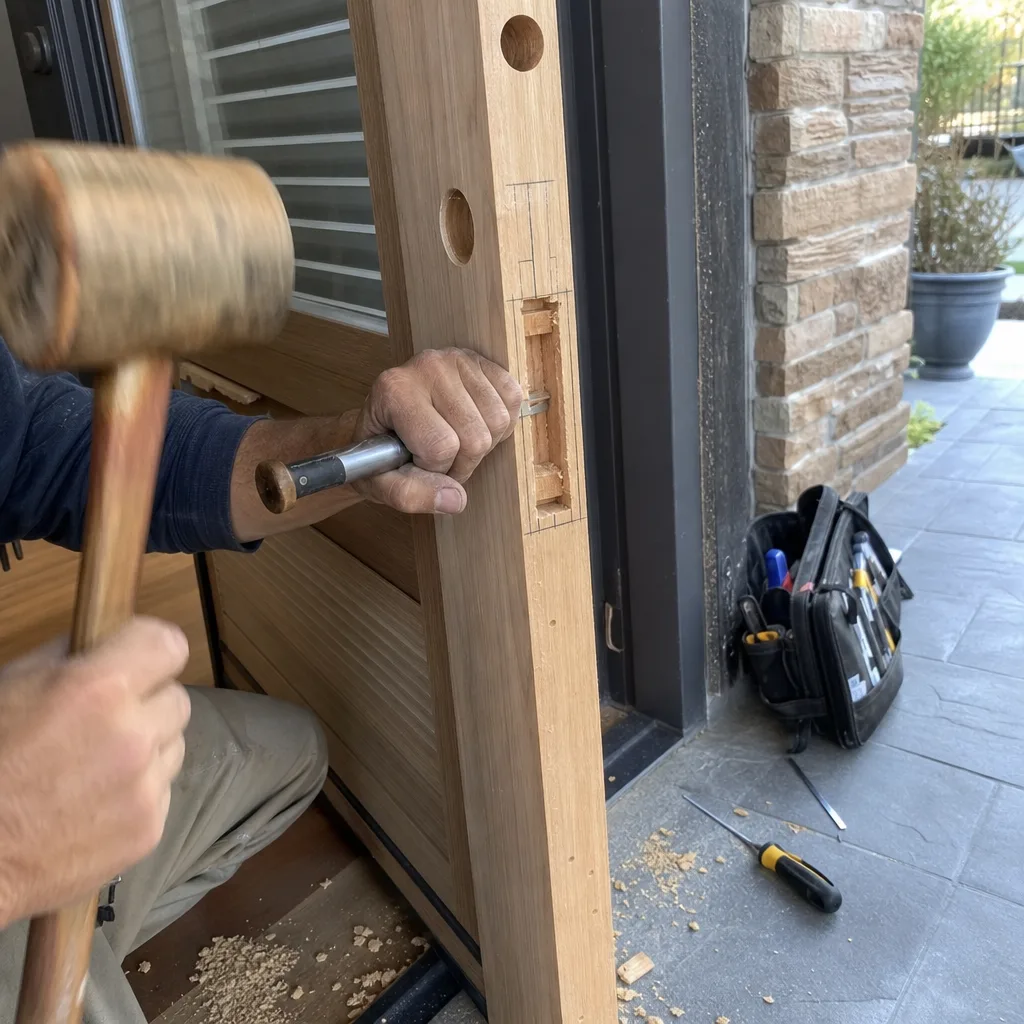
Ashburn’s four-season climate creates a predictable stress cycle for door locks: summer humidity swells frames, fall is the window for correction, winter freeze-thaw cracks cylinders and shifts alignment, and spring is the last chance to fix winter’s damage before humidity returns. Most homeowners need one professional seasonal inspection yearly, with visual checks and operational testing in between. For more guides & resources, visit our blog. The cost of scheduled maintenance is a fraction of emergency lockout service, and the documentation protects your warranty and insurance position. Address seasonal symptoms when they appear; a lock that sticks is already damaged, not merely dirty.
Ready to schedule your seasonal inspection? Call Novak Lock & Security Ashburn at (571) 410-8874 for a free estimate. We’ll quote a firm price on the phone, arrive with a background-checked, uniformed technician, and leave you with a documented photo record and written warranty under our 365-Day Done Right Promise.
Written by Daniel Novak, Owner at Novak Lock & Security Ashburn, serving Ashburn since 2002.