
Last updated September 25, 2026
Non-destructive entry first, always - and we re-key Schlage, Kwikset, and Baldwin locks on the spot while you watch
You get a price before we start. It does not change when we arrive. No surprises.
Locksmith Permits, Codes & Inspections in VA: What You Need to Know
Most Virginia homeowners assume a licensed locksmith company covers all its workers under one credential. It doesn’t. A DCJS locksmith license is issued to a person, not a van. In Ashburn, we’ve arrived at jobs where the technician who showed up had no individual license at all - just a company shirt and a drill. This guide explains how Virginia actually regulates locksmiths, what the building code requires for lock hardware, and how to protect yourself when hiring lock work in Loudoun County, with more guides & resources available on our blog.
Quick Answer
Virginia requires individual locksmith technicians to hold a separate DCJS license in addition to any business registration. Most residential lock replacements do not require a building permit under the Virginia Uniform Statewide Building Code, but new installations in new construction or alterations affecting fire-rated assemblies do. In Ashburn, HOA covenants may impose stricter hardware requirements than the state code. Always verify both the technician’s personal DCJS credential and the company’s liability insurance before work begins.
Table of Contents
- Individual DCJS Licenses vs. Business Registration
- What the Virginia Building Code Says About Lock Hardware
- When a Permit Is Required and When It Isn’t
- Ashburn and Loudoun County: HOA and Local Considerations
- What ‘Bonded and Insured’ Actually Means
- How to Verify a Locksmith License in Virginia
- Filing a Complaint With DCJS: The Exact Process
- A Checklist Before You Hire Any Locksmith
Individual DCJS Licenses vs. Business Registration
Virginia is one of the few states that licenses individual locksmith technicians separately from the business entity. This distinction matters when work goes wrong and determines whether you have any recourse at all.
The Department of Criminal Justice Services (DCJS) issues locksmith credentials under its Regulated Industries program. The license - formally a “Private Security Services Business License” with a locksmith endorsement - attaches to a named individual, not to a company. A business may hold a separate registration, but that registration does not authorize anyone to perform locksmith work. Only the individually credentialed technician may do so.
We’ve encountered this confusion regularly in Ashburn. A customer calls a company with a registered name and a local number. The dispatcher sends a technician. The technician arrives, performs the work, and leaves. Later, when the deadbolt fails or the rekey was done incorrectly, the customer learns the technician was never licensed - and DCJS has no record of the person who actually touched their locks.
Here’s how the two credentials function:
- Individual Locksmith License: Issued by DCJS to a specific person after background check, fingerprinting, and training. The license number follows the individual if they change employers. Expires every two years. Required to perform any locksmith service for compensation.
- Business Registration: Filed with the Virginia State Corporation Commission or local clerk. Allows the entity to operate, pay taxes, and hire employees. Does not authorize locksmith work.
Some companies employ multiple licensed technicians. Others operate with one licensed owner and send unlicensed subcontractors. Virginia law requires the licensed individual to be physically present and directly supervising any unlicensed person performing locksmith work. In practice, this supervision requirement is frequently ignored.
At Novak Lock & Security Ashburn home, every technician who enters a home or business holds an individual DCJS locksmith license. We verify this during hiring and recheck every renewal cycle. The license number is available on request, and we encourage customers to confirm it independently through DCJS.
What the Virginia Building Code Says About Lock Hardware
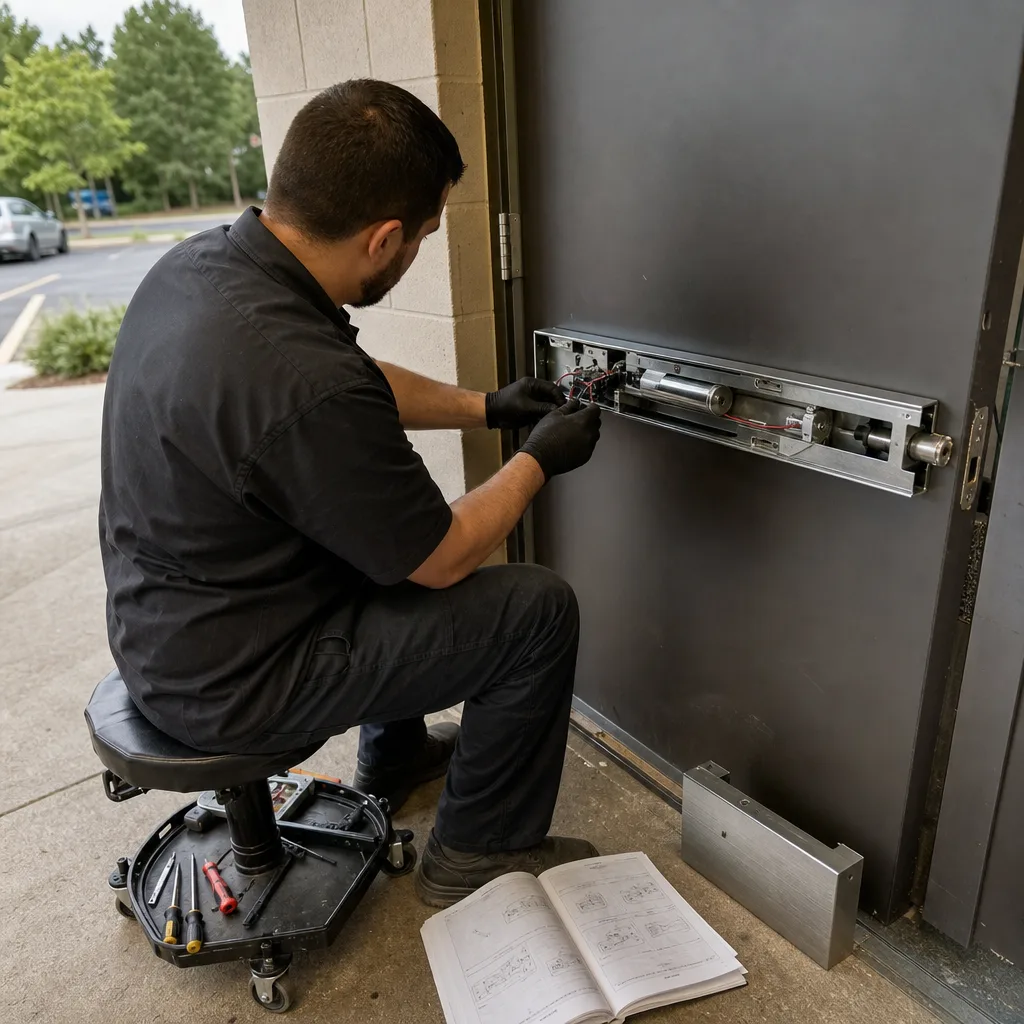
The Virginia Uniform Statewide Building Code (VUSBC) adopts the International Building Code and International Residential Code with state amendments. For homeowners, the relevant sections govern hardware on egress doors, fire-rated assemblies, and accessibility requirements.
For existing residential occupancies, the code does not regulate the grade or brand of lock hardware you install on your front door. You may install a basic entry-grade deadbolt, a high-security Mul-T-Lock cylinder, or a smart lock with Wi-Fi connectivity. The code’s interest begins at life safety: can occupants exit during an emergency, and does the hardware impede required egress?
Key code provisions affecting lock work:
- Egress door hardware: Single-family dwelling exterior doors must be openable from the inside without a key, tool, or special knowledge. A deadbolt with a thumb turn satisfies this. A double-cylinder deadbolt (key required on both sides) violates egress requirements on primary exits unless the door has an adjacent window that could serve as alternate egress, and even then, local interpretation varies.
- Fire-rated assemblies: Doors in fire-rated walls - typically between attached garages and living spaces, or in multi-family common areas - must maintain their rating. Hardware replacement must use fire-rated components and proper installation. Altering the door prep or installing non-rated hardware can void the assembly’s rating.
- Accessibility: Hardware must be operable with one hand without tight grasping, pinching, or twisting of the wrist. Lever handles satisfy this; most knob sets do not, though the IRC contains exemptions for single-family dwellings that the IBC does not.
In Ashburn’s newer construction, particularly in communities built after 2015, we’ve found builders increasingly using fire-rated garage entry doors with integrated seals, a concern we address in our Seasonal Locksmith Care for Ashburn: Year-Round Homeowner’s Guide. When homeowners replace the lock on these doors, they often install standard deadbolts that compromise the seal or use screws that penetrate the fire-rated core. We document the existing condition, note the door rating if visible, and specify fire-rated hardware in our written scope when required.
The code does not require a specific security grade. An ANSI Grade 3 lock meets the same code minimum as an ANSI Grade 1. The difference is cycle life and forced-entry resistance - a security consideration, not a code compliance issue.
When a Permit Is Required and When It Isn’t
This is where homeowners most commonly overthink or underthink the process. The permit requirement depends on whether the work constitutes an “alteration” under the VUSBC or a straightforward “repair or replacement.”
No permit required:
- Replacing an existing lock with a functionally equivalent lock on the same door prep. This includes upgrading from a Grade 3 to a Grade 1 deadbolt, changing from a keyed entry to a smart lock, or rekeying existing cylinders.
- Rekeying all cylinders in a home. No structural change, no permit.
- Installing a new lock on a non-fire-rated interior door where no lock existed before, provided the door is not part of a required egress path.
Permit required:
- New construction - any lock installation before certificate of occupancy.
- Altering a fire-rated door assembly, including changing the prep size, adding a second bore hole, or installing hardware not listed for that rating.
- Installing electric strike releases, magnetic locks, or access control systems that tie into the building’s fire alarm or egress control system. This triggers both building and electrical permits in most jurisdictions.
- Historic district work in jurisdictions with overlay requirements. Loudoun County does not maintain a historic overlay in Ashburn proper, but Leesburg’s historic district does.
Loudoun County’s Department of Building and Development interprets the VUSBC for unincorporated areas, which includes most of Ashburn. Incorporated towns like Purcellville and Leesburg administer their own permits. For a standard residential rekey or deadbolt replacement in Ashburn’s unincorporated areas, no permit is required. For Commercial Locksmith in Ashburn work involving access control, we coordinate permit applications as part of our written scope.
The permit fee for minor residential alterations in Loudoun County typically runs $75-$150, plus plan review if electrical work is involved. More relevant than the fee is the inspection requirement: permitted work must be inspected, and failed inspections require correction before final approval. We price this coordination into our commercial proposals, with the permit cost listed as a line item in our written quote; see our Commercial Locksmith Maintenance Checklist for Ashburn Homeowners for related planning guidance.
Ashburn and Loudoun County: HOA and Local Considerations
Ashburn’s master-planned communities operate under covenants, conditions, and restrictions (CC&Rs) that frequently exceed state code requirements. These are private agreements binding property owners, not public regulations - but violation can result in fines, liens, or forced remediation.
Common HOA provisions affecting lock hardware in Ashburn communities:
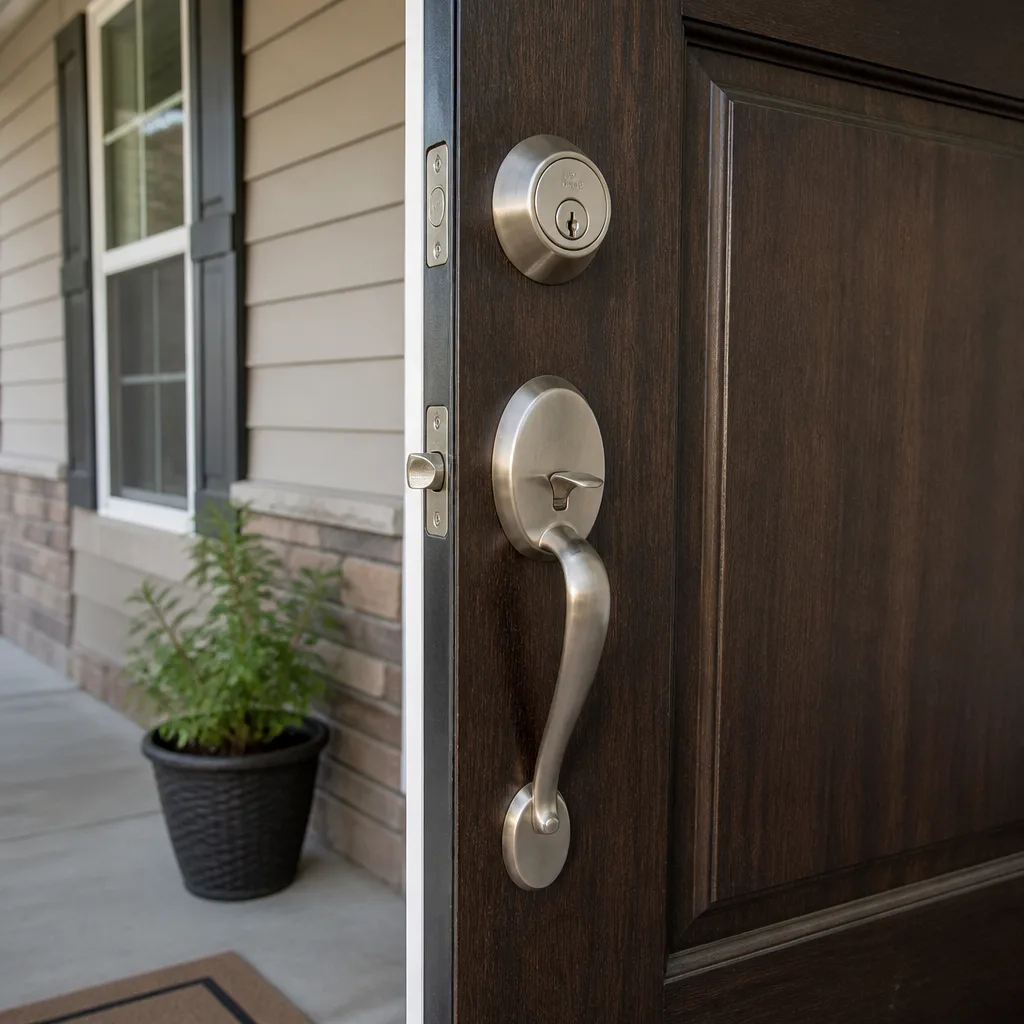
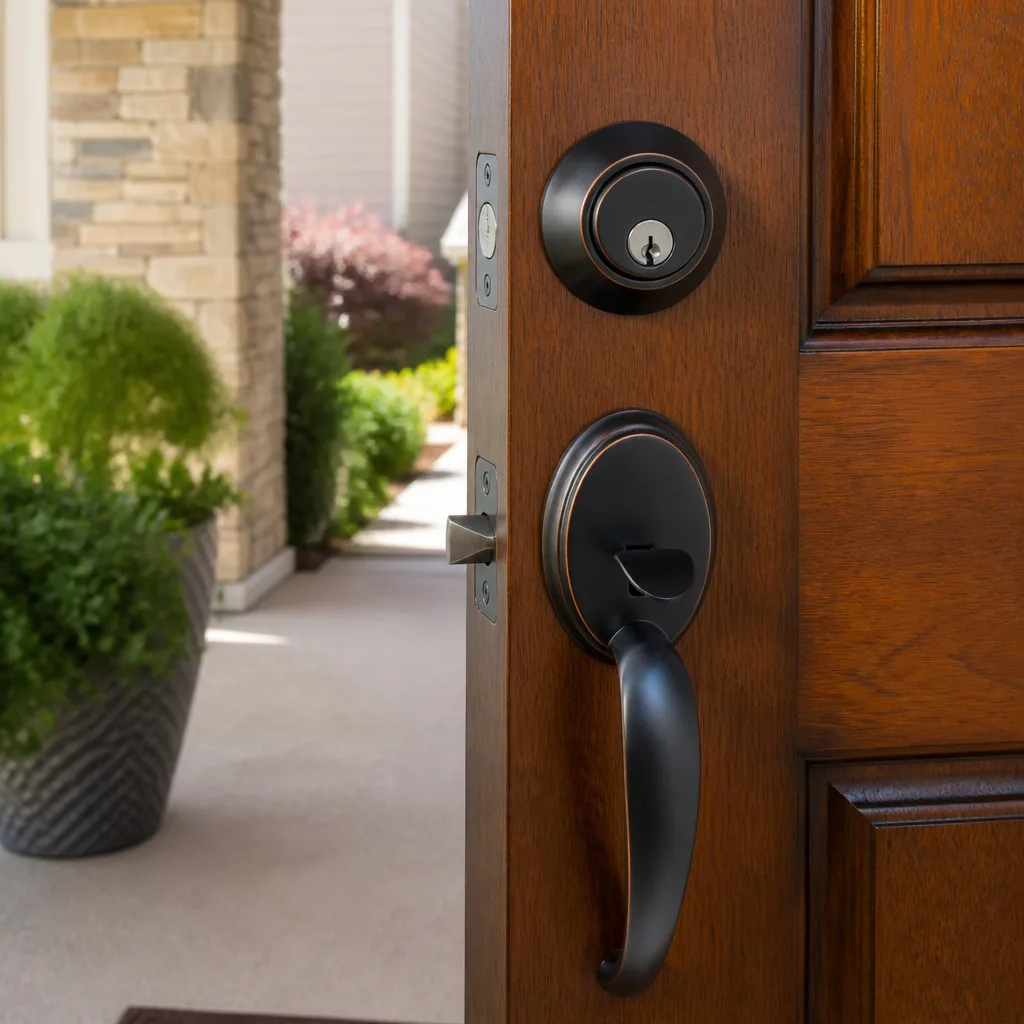
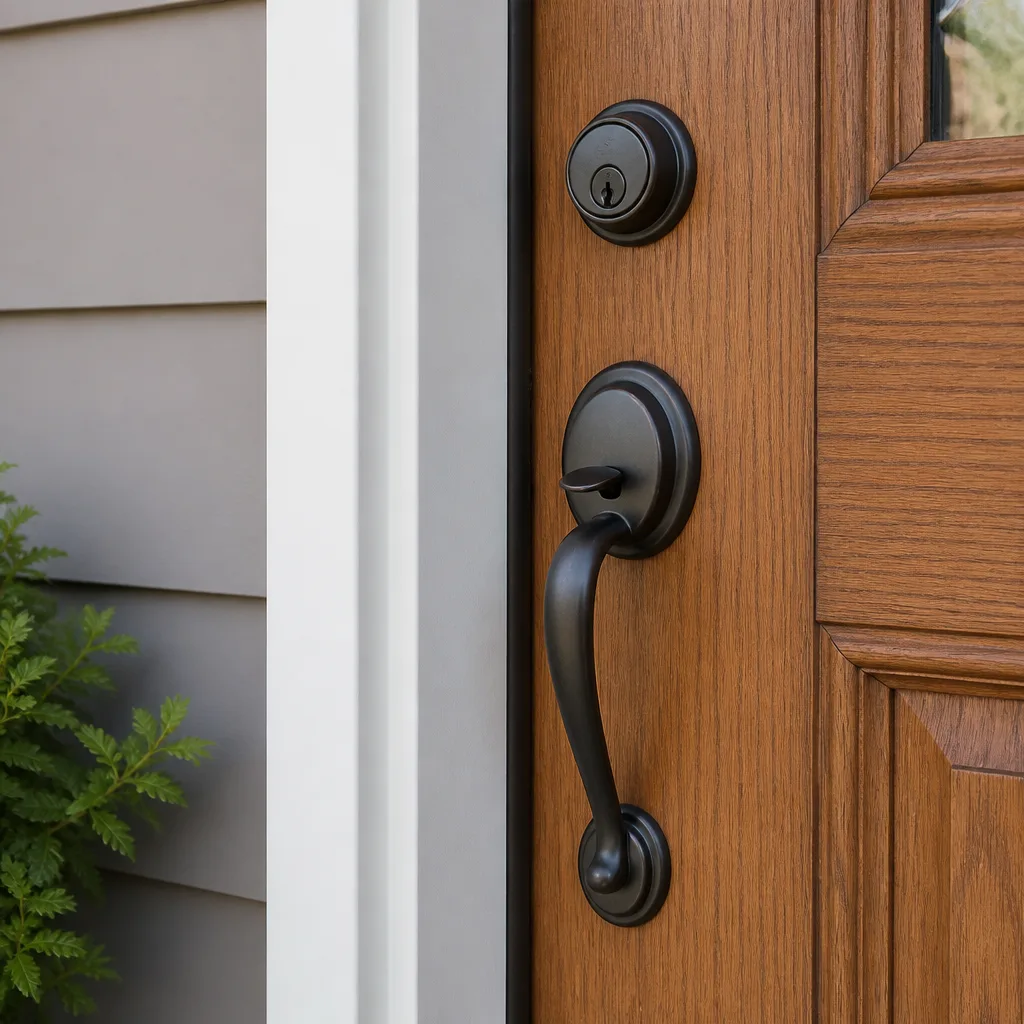
- Exterior hardware finish: Many Ashburn HOAs mandate oil-rubbed bronze, brushed nickel, or black finishes on front door hardware visible from the street. We’ve replaced Schlage satin chrome deadbolts at Brambleton and One Loudoun after HOA violation notices.
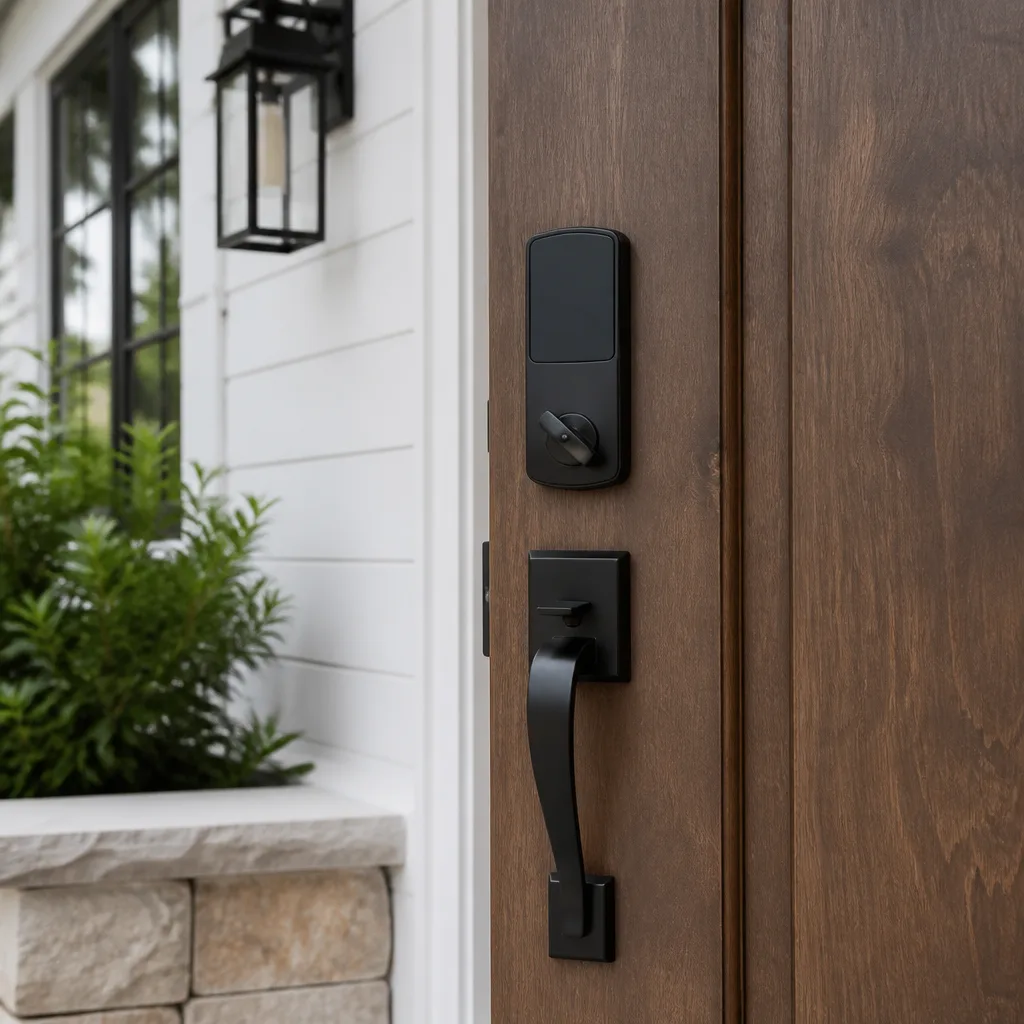
- Smart lock appearance: Some covenants prohibit visible electronic components or require them to match the door color. Others restrict keypad placement or LED indicator visibility.
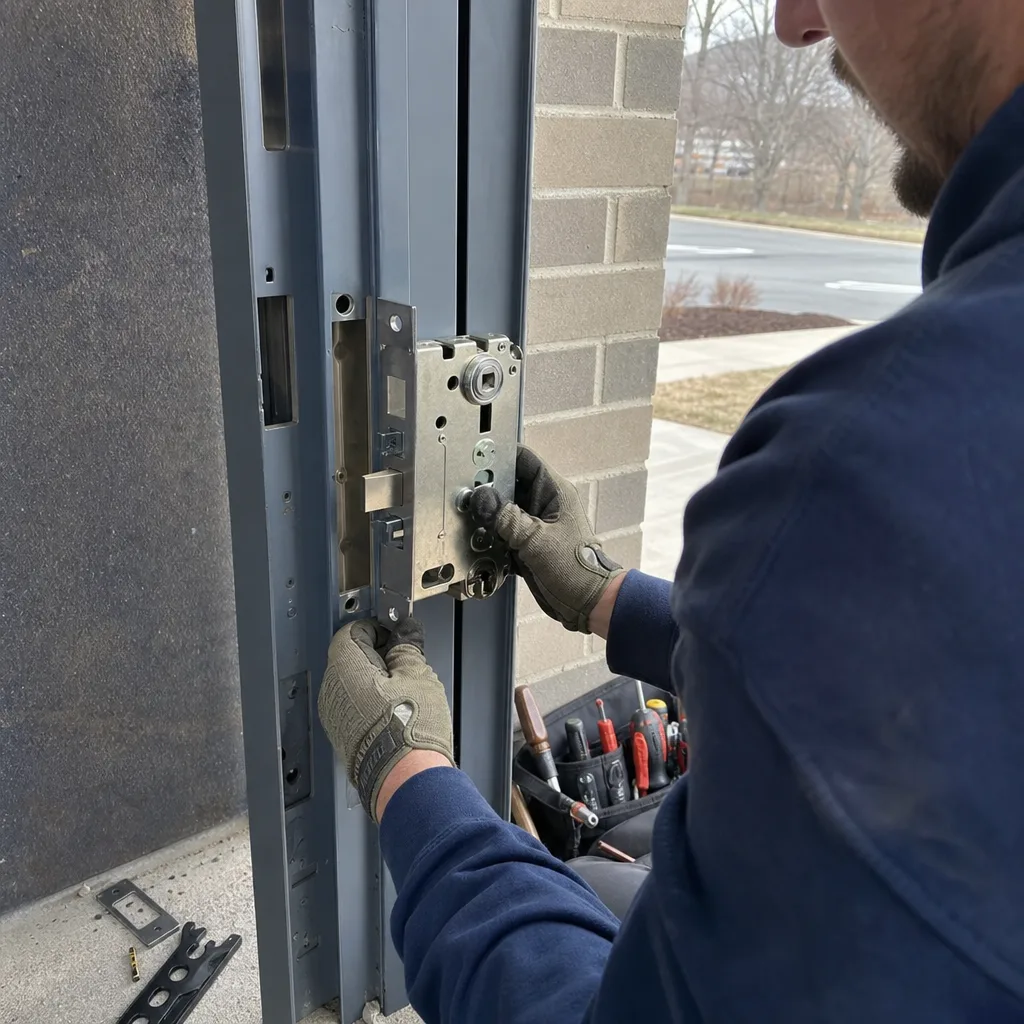
- Multi-point locking systems: In communities with European-style door packages - common in Ashburn’s higher-end builds from 2018 forward - HOAs may require that replacement hardware maintain the multi-point function rather than converting to a single deadbolt.
- Hardware brand restrictions: Rare, but we’ve encountered covenants specifying “builder-grade or equivalent” finishes, which effectively excludes high-security cylinders with visible drill-resistant inserts.
The HOA does not enforce the building code, and the building code does not enforce HOA covenants. A lock installation can be fully code-compliant and still violate your CC&Rs. Before we install hardware in Ashburn’s planned communities, we ask whether the customer has reviewed their covenants. For Residential Locksmith in Ashburn work in HOA-governed neighborhoods, we note the existing finish and style in our documented photo record to establish baseline compliance.
Loudoun County’s noise ordinance and business licensing also affect locksmith operations. We hold a Loudoun County business license and comply with after-hours service restrictions in residential zones. This matters for emergency lockout response: a technician arriving at 2 a.m. with an impact driver can generate a noise complaint if not mindful of the ordinance.
What ‘Bonded and Insured’ Actually Means
Locksmith advertising frequently claims “licensed, bonded, and insured” without explaining what each term covers, a red flag detailed in our Locksmith Warning Signs: A Ashburn Homeowner’s Reference Guide. The distinctions matter when property is damaged, work is left incomplete, or a technician causes injury.
Bonded: A surety bond is a three-party agreement between the locksmith (principal), the customer (obligee), and a surety company. If the locksmith fails to complete contracted work, steals property, or damages a home and cannot pay, the customer can file a claim against the bond. Virginia does not require locksmiths to carry bonds, but many reputable operators do. Typical bond amounts range from $5,000 to $25,000. The bond protects the customer, not the locksmith - it is a financial guarantee of performance.
Insured: General liability insurance covers property damage and bodily injury caused by the locksmith’s operations. If a technician drills through a door and damages interior wiring, liability insurance pays for repair. If a customer trips over the technician’s tools and is injured, liability coverage responds. Typical policies carry $1 million per occurrence limits. Some locksmiths carry only the state minimum auto insurance for their van and no general liability at all.
Workers’ compensation: Required in Virginia for businesses with three or more employees. Covers technician injuries on your property. Without it, an injured worker could pursue your homeowner’s policy.
We carry all three: surety bond, general liability, and workers’ compensation. We provide certificates of insurance on request, naming the customer as additional insured for commercial projects. For residential work, we include proof of coverage in our written documentation packet. Haven Standard Clause 4 requires documented evidence of all coverage before any work begins.
The critical step most homeowners skip: asking for proof. A verbal claim of bonding or insurance is worthless. Request a certificate directly from the insurance carrier or bond company, not a photocopy from the technician’s clipboard.
How to Verify a Locksmith License in Virginia
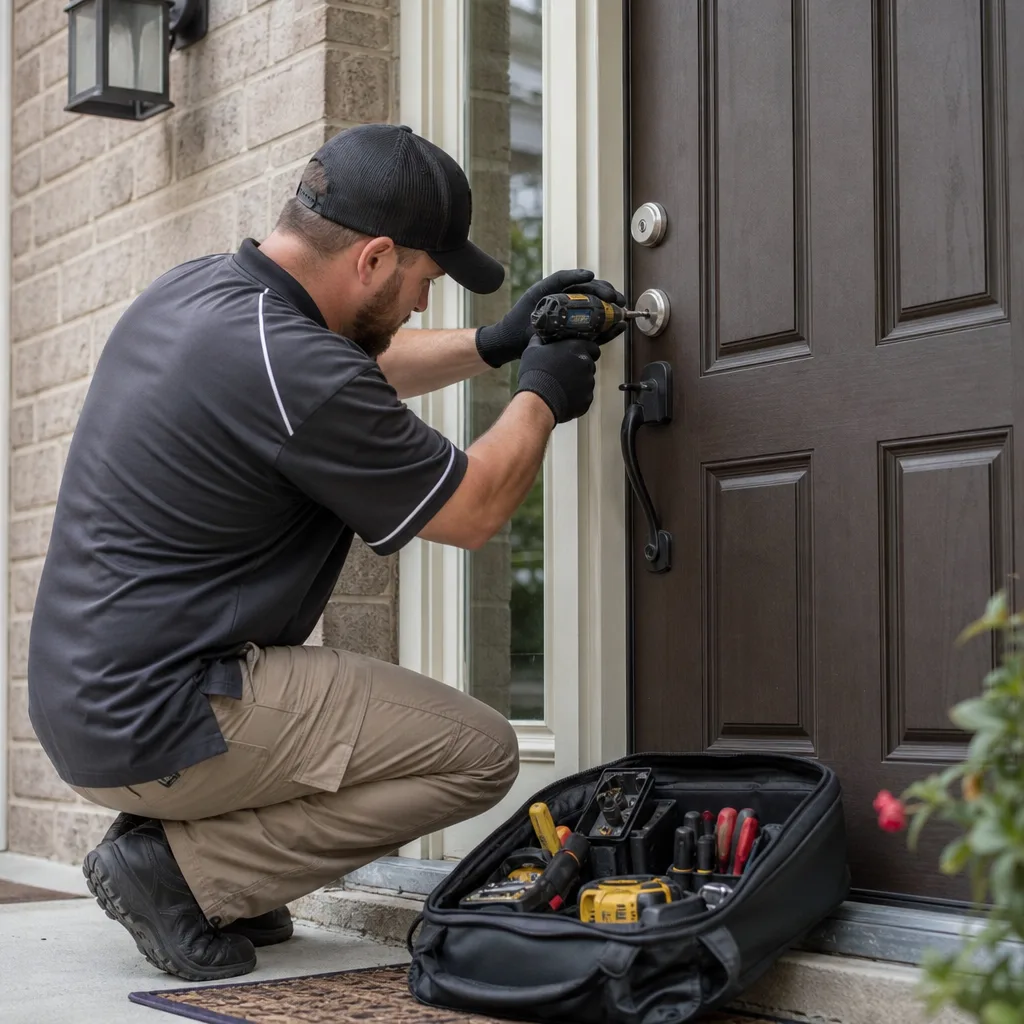
DCJS maintains a public license verification system. The process takes under two minutes and can prevent most locksmith fraud.
- Obtain the full name and license number. Ask the technician or dispatcher for both. A legitimate operator provides this without hesitation. Resistance is a red flag.
- Visit the DCJS Regulated Industries license search. Search by name or license number at the DCJS website. The system returns credential status, expiration date, and any disciplinary history.
- Confirm the license class. The entry should show “Locksmith” under “Registration Type.” Some individuals hold only “Security Officer” or “Private Investigator” credentials, which do not authorize locksmith work.
- Check expiration. DCJS locksmith licenses expire every two years. An expired license is invalid, even if the individual claims renewal is “in process.”
- Verify employment alignment. The license belongs to the individual, but DCJS records may show an associated company. If the technician arrives in a van for a different company, ask why.
We’ve tested this process with our own technicians. Daniel Novak’s DCJS credential and current status are available through this search, and we encourage customers to verify before any Access Control Systems in Ashburn work or residential service.
Additional verification steps:
- Search the Virginia State Corporation Commission for business registration status and registered agent.
- Check Loudoun County business license status for local tax compliance.
- Request proof of insurance directly from the carrier, not the company.
The time invested in verification typically prevents the $400-$1,200 losses we see from unlicensed operators who drill unnecessarily, install incorrect hardware, or disappear after taking payment.
Filing a Complaint With DCJS: The Exact Process
If work was performed by an unlicensed individual, or if a licensed technician violated standards, DCJS accepts complaints through its Regulated Industries Compliance unit. The process is administrative, not criminal - DCJS cannot force a refund or award damages, but it can suspend or revoke licenses and impose civil penalties.
- Document everything. Gather the technician’s name, company name, license number (if claimed), date of service, description of work, and all payment records. Photograph the work condition. Our documented photo record standard exists precisely because this evidence proves invaluable in disputes.
- File the complaint. Submit through the DCJS website or by mail to the Regulated Industries Compliance office in Richmond. The form requires your contact information, the subject’s information, and a narrative of the violation.
- DCJS review. An investigator reviews the complaint and may request additional documentation. For unlicensed activity, DCJS coordinates with local law enforcement if criminal fraud is suspected.
- Resolution. DCJS may issue a warning, impose fines, suspend the license, or refer for criminal prosecution. The complainant receives notice of the outcome but does not participate in the hearing.
Remedies for the customer are limited. DCJS does not operate a restitution fund. For financial recovery, you must pursue small claims court or the company’s bond/insurance. The DCJS complaint primarily protects future customers by removing bad actors from the trade.
In Ashburn, we’ve assisted customers with documentation for DCJS complaints against other operators. Our photo record, written scope, and itemized invoice provide a model for what proper documentation looks like - and what to demand from any locksmith you hire.
A Checklist Before You Hire Any Locksmith
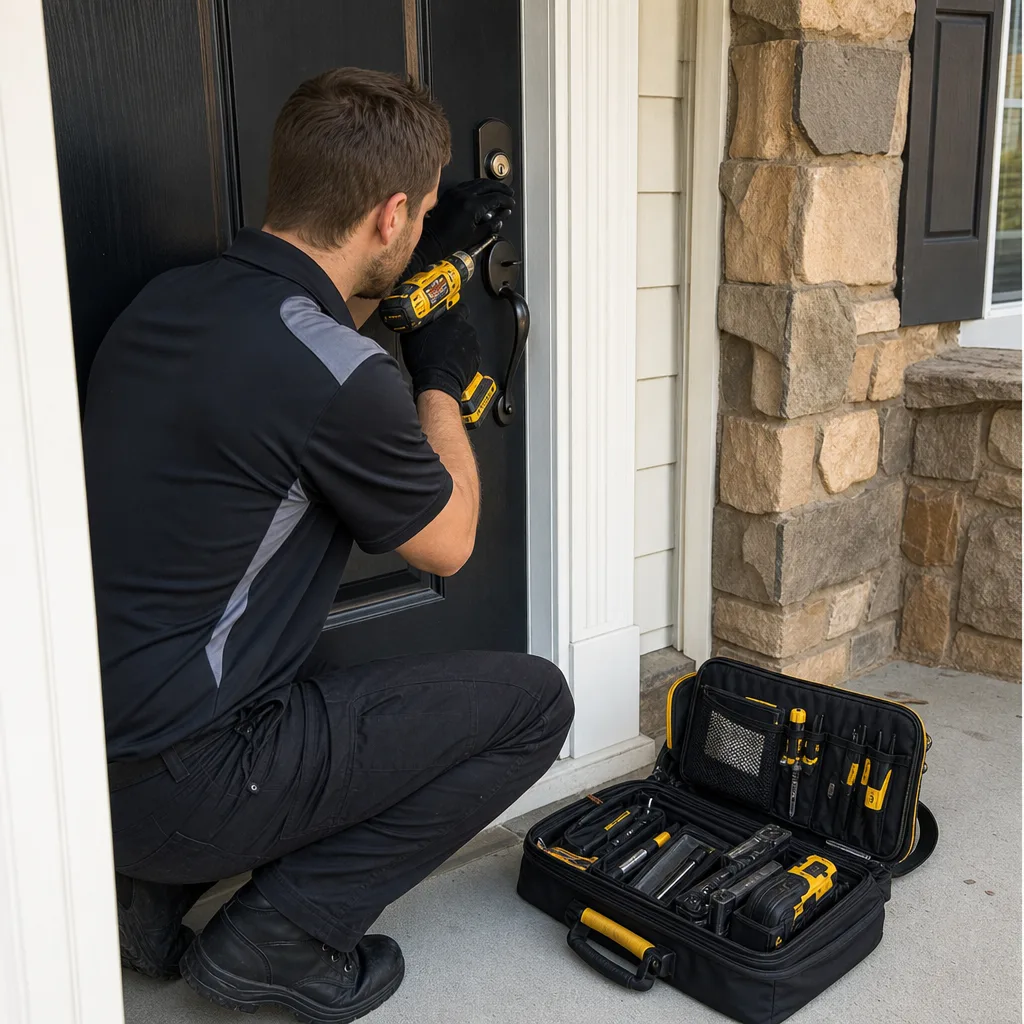
Use this checklist for every locksmith hire, including ours. No reputable operator objects to verification.
- Obtain the technician’s full name and individual DCJS license number before scheduling.
- Verify the license through DCJS public search; confirm “Locksmith” registration type and current expiration.
- Request proof of general liability insurance and surety bond; verify directly with carriers if uncertain.
- Confirm the company holds a valid Loudoun County business license (for Ashburn work).
- Demand a written price before work begins, with itemized labor, materials, and any trip charges.
- Ask whether the technician will be the licensed individual or supervised by one.
- For fire-rated doors or access control, confirm permit requirements and who will obtain them.
- Request documentation of the work performed, including photos, for your records.
Haven Standard Clause 1: the price on the phone is the price on the invoice. This applies to every job we perform, and it should be your minimum standard for any locksmith you hire.
Common Mistakes to Avoid
- Hiring based on the first Google result without verification. Paid ads and map listings do not confirm licensing. In Ashburn, we’ve found unlicensed operators ranking above legitimate businesses by gaming review platforms.
- Accepting a verbal price that “the technician will confirm on arrival.” This is the standard bait-and-switch script. The dispatcher quotes low; the technician invents complications. Insist on a written, itemized quote before dispatch.
- Ignoring HOA covenants for visible exterior hardware. Ashburn’s Brambleton, Loudoun Valley, and One Loudoun communities have active architectural review boards. A non-compliant lock installation generates a violation notice and replacement cost.
- Installing double-cylinder deadbolts on required egress doors. Code-compliant in some configurations but dangerous in others. We’ve removed these after home inspections flagged them for real estate transactions in Ashburn.
- Assuming a company license covers all employees. Virginia doesn’t work this way. Verify the individual who will touch your locks.
- Skipping documentation of existing condition. Without photos, proving pre-existing damage versus technician-caused damage is impossible. Demand a photo record as standard procedure.
- Paying cash without a written invoice. No invoice means no warranty enforcement, no DCJS complaint evidence, and no tax record. We provide itemized invoices for every transaction, per Haven Standard documentation requirements.
When to Call a Professional
Call a licensed locksmith when you’re locked out, moving into a new home, managing rental property turnover, upgrading security after a break-in, or installing access control for a business. For fire-rated doors, historic properties, or Commercial Locksmith in Ashburn systems, the permit and code complexity justifies professional coordination.
Novak Lock & Security Ashburn offers free estimates in Ashburn. Call (571) 410-8874. We’ll quote a firm price on the phone, verify licensing and insurance on request, and provide a written scope before any work begins. Every visit includes a documented photo record and is backed by our 365-Day Done Right Promise.
Frequently Asked Questions
Yes. Virginia requires individual locksmith technicians to hold a DCJS Regulated Industries license. Business registration alone is not sufficient. Always verify the specific technician’s license, not just the company name.
DCJS charges approximately $125-$150 for initial application and fingerprinting, plus $80-$100 for the required training course. Renewal every two years costs approximately $60. These are technician costs, not customer costs - but they indicate whether an operator has invested in legitimate credentialing.
No, for standard replacement of existing locks on non-fire-rated doors. Yes, for new installations in new construction, alterations to fire-rated assemblies, or electric access control systems. Loudoun County enforces the Virginia Uniform Statewide Building Code for unincorporated Ashburn.
You lose DCJS recourse if work is defective or fraudulent. You may still pursue small claims court or the company’s bond, but DCJS cannot discipline an unlicensed individual. File a complaint anyway - DCJS tracks unlicensed activity and coordinates with law enforcement for repeat offenders.
Yes, if your covenants specify exterior hardware standards. HOAs regulate appearance, not security grade. Check your CC&Rs before installing visible smart locks or non-standard finishes. We note existing hardware in our photo record to establish compliance baseline.
At Novak Lock & Security Ashburn, yes. Haven Standard Clause 1 prohibits our technicians from changing the quoted price at the door. The price we state is the price on the invoice, with no call-out surcharge added on arrival. Call (571) 410-8874 for a written estimate.
The Bottom Line
Virginia’s dual licensing system - individual technicians separately from businesses - creates a verification gap that unscrupulous operators exploit. The building code governs life safety, not security grade. Ashburn’s HOA covenants add a third layer of compliance. Protect yourself by verifying the technician’s personal DCJS license, confirming insurance and bonding directly with carriers, and demanding written pricing before any work begins. Documentation is your only leverage if something goes wrong.
Written by Daniel Novak, Owner at Novak Lock & Security Ashburn, serving Ashburn since 2002.